









✍️ Por el equipo de ChimelongInternationalCircus.com — tested settings from three show nights — one mirrorless, one phone · 🗓️ Last updated: November 2026 · ⏱️ ~9 min read
The Chimelong International Circus is one of the most photogenic rooms in Chinese entertainment: a 6,000-seat arena, a cast of 300-plus performers from over 20 countries, lighting design that paints every act, and a big top that glows over the resort like a lagoon of gold at dusk. It is also a live show with people flying eight meters above a ring — which means the photography rules here exist for reasons more serious than vanity. This guide covers both halves: the etiquette and policy you must respect, and the settings, timing and seat choices that fill a memory card worth keeping.
📜 The Rules First: Flash, Rigs and the Performer’s Contract
House etiquette at a circus is not decorative — it is a safety contract with people mid-stunt. The core rules from our visits: no flash during the performance (a bright pop in a performer’s eyes during an aerial catch is the textbook nightmare; the show’s lighting design also assumes darkness), no tripods, monopods or rigs that extend into aisles or block sightlines, and no standing in the tiers while acts run — shoot from your seat or not at all. Personal, casual video from your seat is the practical norm, but commercial shooting is a different permission entirely; if your trip has any professional dimension, ask the venue in advance rather than at the gate. Policies do get updated, so the current camera line on your e-ticket or at guest services is the authority — treat this guide as technique, not permission.
⚠️ The flash rule is the one that matters most. Beyond endangering performers, a flash frame in a dark arena is technically useless anyway — the light falls apart at ring distance. If your camera keeps flashing, it is telling you it cannot shoot the show; switch modes or enjoy the night.
📷 Settings That Actually Work in a Dark Arena
Circus light looks bright to the eye and is dim to a sensor — plan for it. The tested baseline: the fastest lens you own (f/2.8 or better), shutter speeds around 1/320–1/640s (fast enough to hold most acts, slow enough to keep ISO survivable), ISO 3200–6400 on a modern full-frame body or flagship phone, continuous autofocus with tracking, and burst mode for aerial releases and ensemble finales. Two judgment calls that change everything: first, accept grain over blur — a noisy sharp frame beats a clean smeared one, always; second, expose for the act, not the room, and let the blacks go black. The production’s lighting is doing color grading live; your job is to record it, not correct it.
| 📸 Shot | 🎛️ Settings that worked | 🎯 When to fire |
|---|---|---|
| Aerial releases | 1/500s, f/2.8, ISO 4000–6400, burst | At the top of the swing — not at the catch; anticipation beats reaction |
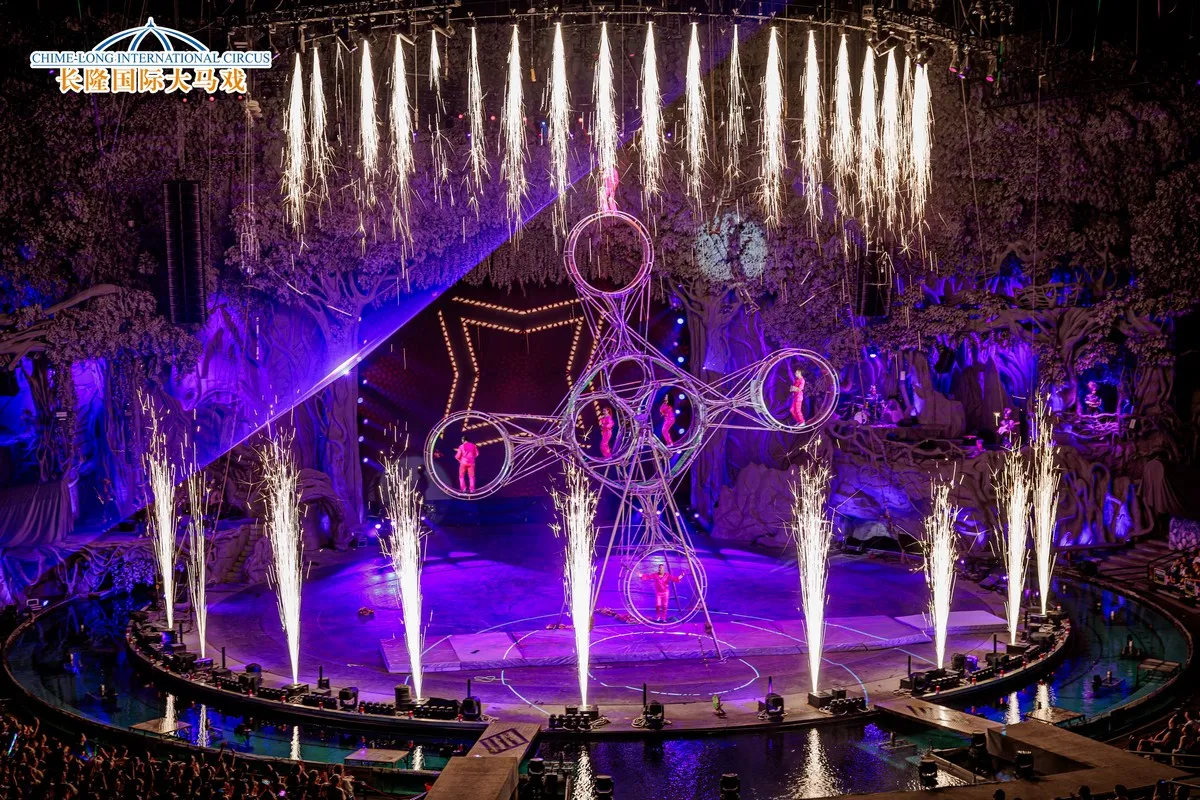
| Globe riders | 1/320s, f/2.8, ISO 3200, AF-tracking | When the bikes cross, not circle — crossings are the sharp frames |
| Ensemble finale | 1/250s, f/2.8, ISO 3200, wide | First 30 seconds, while confetti hangs and the ring is fullest |
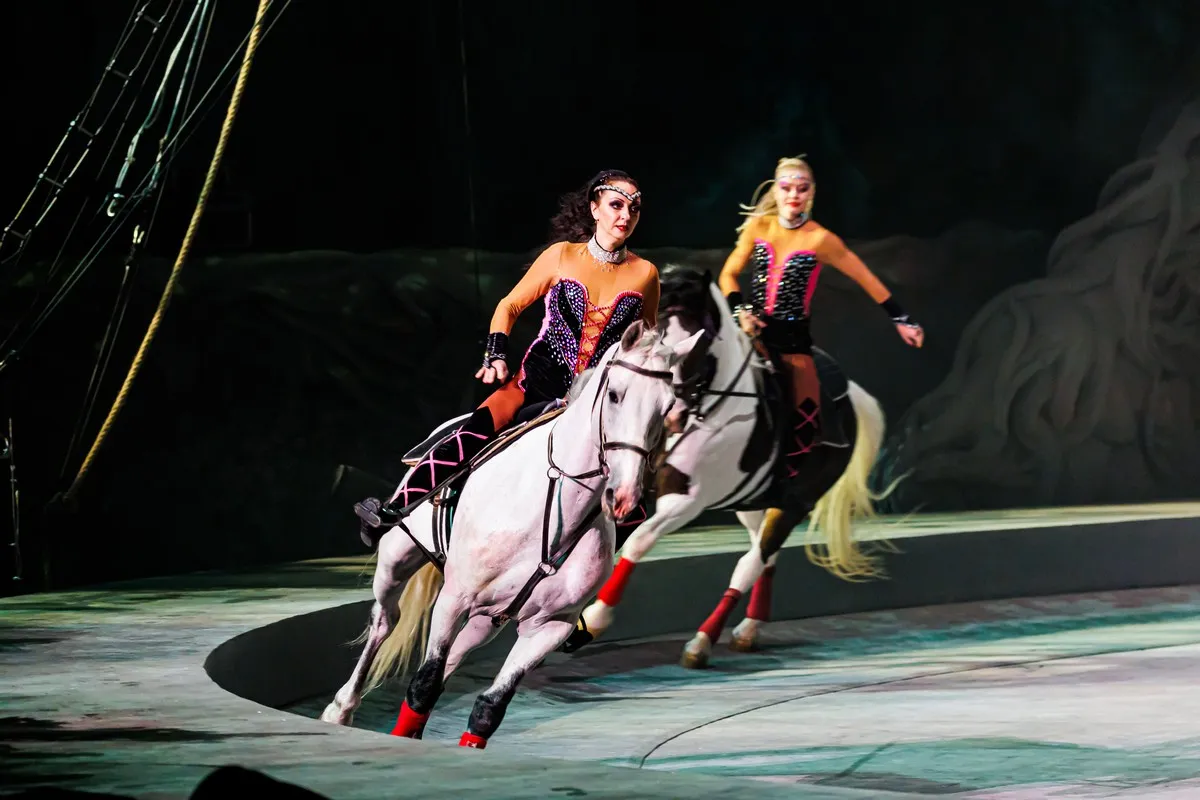
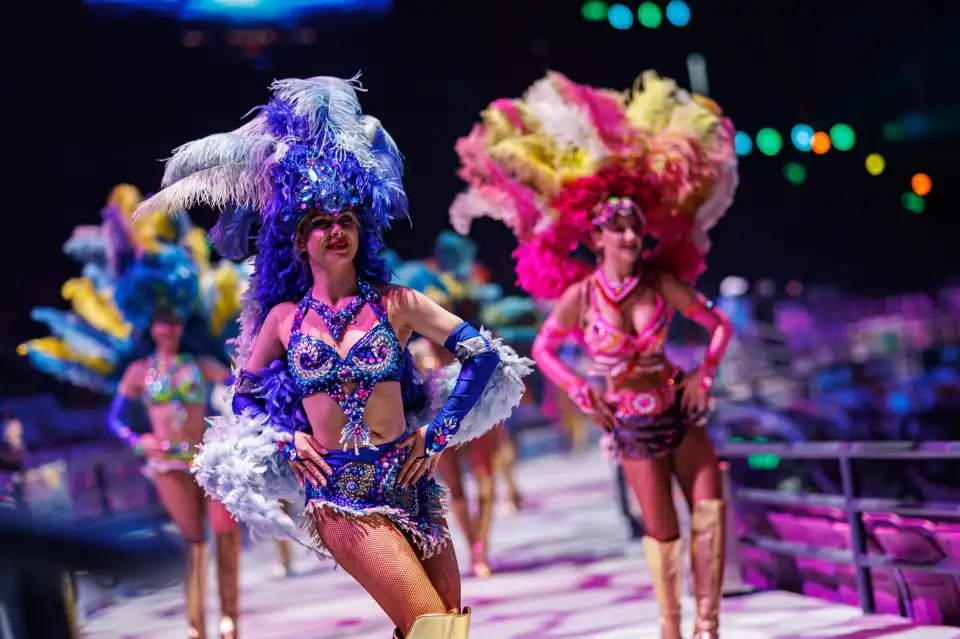
| Costume close-ups (premium seats) | 1/320s, f/2.0–2.8, ISO 3200 | During the opening parade, when cast moves close to the tiers |
| Big top exterior at dusk | 1/60s, f/4, ISO 800, braced | 15–20 minutes before curtain, while the sky holds color |
💡 Phone shooters: lock the exposure down, not up. Tap the brightest part of the stage, drag the exposure slider down until the ring’s colors saturate, then shoot bursts. Modern phones hold ISO 3200 far better than their reviews claim — and the phone’s small sensor forgives handheld shake that ruins larger cameras.
🪑 The Seat Is the Shot: Where to Sit for the Camera
Photography is the one priority that flips the usual seating logic. Elevation is your friend: upper-mid center seats look over heads instead of through them, frame the ring’s geometry cleanly, and catch the aerial lines whole — the same conclusion the guía de asientos reaches for choreography-lovers, for the same reason. Ring-adjacent seats give you costume texture and performer expressions but produce backs-of-heads and steep upward angles on anything that flies. Our tested compromise: buy upper-mid center, shoot the wide architecture all night, and save the people shots for the opening parade, when the Apertura mágica sends the full international cast within reach of every tier.
⏱️ Timing the Memory Card: The Five Windows
The show rewards planned bursts over constant shooting, and five windows do most of the work. Window one: dusk outside — the big top’s exterior while the sky holds color (the shot everyone regrets skipping). Window two: the pre-show concourse — theming, merchandising and the building itself with room to compose. Window three: the opening parade — the night’s best people-photography. Window four: the act you came for — for most of the room that is the globe riders (the análisis explains why they own the exit-queue conversation); give them two or three planned bursts, not forty frames. Window five: the finale and its confetti — then put the phone down and watch the bow. Between windows, watch the show; the production guide will tell you what you are looking at, and the memory of understanding outlasts any JPEG.
🔋 The Practical Kit List (Learned the Hard Way)
Three practical notes that no settings chart covers. Batteries: cold-free but constant shooting at high frame rates drains them — a fully charged phone plus a small power bank covers a circus evening, and mirrorless shooters should start the night on a fresh cell, not the 40% one. Storage: burst discipline multiplies file counts fast; clear your card at the hotel, not in the concourse queue. And hands: you will want one hand free for water, tickets and kid-wrangling, so a single small camera beats a two-body rig, and a pocketable phone gimbal is more burden than help in a seated arena. The venue’s concourse keeps bags light anyway (the wheeled-transport and bag rules in our guía para principiantes apply), and the best kit decision we ever made was bringing less gear and better eyes.
🌌 Beyond the Show: The Resort’s Night Portfolio
If the camera is the point of the evening, build the night around it. Arrive early and shoot the approach: the lit silhouette of the big top from the shuttle loop is the establishing shot of the whole trip. Post-show, let the crowd drain and take the concourse back for clean venue frames, then walk the resort’s evening paths — the evening itinerary’s 9:00 PM nightcap hour is a photographer’s hour, with the walkways quiet and the hotel exteriors lit. Staying at one of the hoteles del resort adds the lobby-and-grounds portfolio the next morning, before the day guests arrive. The circus itself remains the centerpiece — ranked among Trip.com’s 2026 TripBest global night attractions — but the hours around it are why photographers should plan the whole evening, not just the 80 minutes.
✅ The Photographer’s Checklist
The whole system in one breath: confirm the current camera policy at booking (the guía de compra covers where policies live); buy upper-mid center seats; fast lens, exposure locked down, burst discipline; shoot the five windows and nothing between; flash never, rigs never, aisles clear; and spend the finale with your own eyes. Do that and you will come home with the rarest souvenir from this venue — frames sharp enough to keep, from a night you were actually present for. And when the memory card is full and the confetti settles, the guía para principiantes is waiting to plan your next visit; the show, after all, runs nightly, and no two programs ever quite repeat.
The five windows are easier to shoot from a confirmed seat — pick your tier on Trip.com with the seating logic above in mind, and the memory card will thank you.
❓ Preguntas frecuentes
¿Se pueden tomar fotos en el Circo Internacional de Chimelong?
Yes — personal, non-flash photography from your seat is normal practice at the circus, and the pre-show concourse is built for photos with the venue’s theming. Follow the house etiquette that protects the show for everyone: no flash during the performance (it endangers performers mid-stunt and ruins the lighting design), no tripods or rigs blocking aisles, and no standing in tiers while the acts run. Rules can be updated by the venue, so confirm the current camera policy at the gate or on your e-ticket.
¿Qué ajustes de cámara funcionan para un espectáculo de circo?
Piensa en cristal rápido y ISO alto: f/2.8 o más rápido, obturador alrededor de 1/320–1/640s para la mayoría de los actos, ISO 3200–6400 en cámaras y teléfonos modernos de fotograma completo o de sensor más grande, autofoco continuo con seguimiento de sujeto, y modo ráfaga para los lanzamientos aéreos. Acepta el grano antes que el desenfoque: un fotograma nítido con ruido supera siempre a uno limpio y arrastrado.
¿Dónde están los mejores asientos para la fotografía?
Upper-mid tiers, center sections: elevation cleans your sightlines over heads, center alignment frames the ring geometry, and the aerial sequences read fully. Ring-adjacent seats produce dramatic close-ups but fight you with backs of heads and extreme upward angles — the trade-offs are mapped in our guía de asientos.
¿Puedo grabar video del espectáculo?
Short handheld clips from your seat are the practical norm for personal use, but the venue’s policy is the authority — commercial shooting and any setup that blocks other guests are not. Keep the phone low, keep clips brief, and put it away for the acts you actually want to remember. Confirm the current video rules at the gate if you plan anything beyond casual clips.
What are the best non-show photo spots in the resort?
The big top’s lit exterior at dusk is the signature shot, best from the approach walk while the sky still holds color. The resort’s themed landscaping, the hotel lobbies (see the guía de hoteles) and the evening walkways give you the rest — and the 15-minute window after the finale, when the crowd drains, returns the concourse to you for clean venue shots.
