










✍️ By the ChimelongInternationalCircus.com Team — written after watching the show twice from production-minded seats, notes in hand · 🗓️ Last updated: November 2026 · ⏱️ ~10 min read
Somewhere in the second viewing, a switch flips: you stop watching the stunts and start watching the machinery that makes the stunts possible. That is how this post was born. After our first night at Chimelong International Circus, we went back with different eyes — seats higher, notes on our phone, attention on the roof grid instead of the ring — and the show doubled in size. This guide shares what we saw: how a 6,000-seat arena stages an 80-minute nightly production with more than 300 performers from over 20 countries, and how to watch it like a producer.
First, the frame. The circus has run nightly since 2000 in a purpose-built theatre — the kind of run that only survives on production discipline. Trip.com’s official introduction credits it with a cumulative audience of over 50 million and a cast of 300-plus artists from more than 20 countries under the banner of “Chinese creativity, global integration.” Numbers like those are not just marketing: they describe an operation that rehearses, maintains, restages and re-casts continuously, every single week, for a quarter of a century.
🏗️ The Venue Is the First Prop: A 6,000-Seat Machine Built for One Show
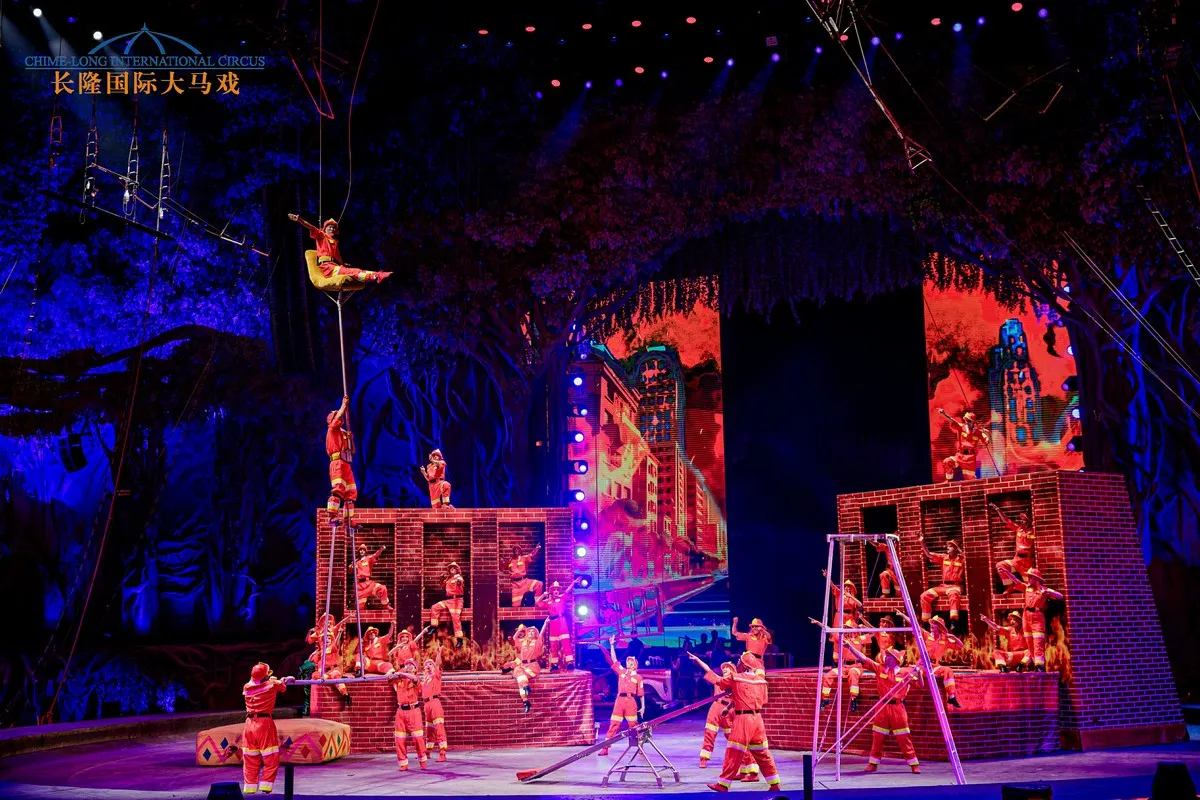
Start with the architecture, because it does half the work. The arena is built in the round: the ring sits at the geometric center, tiers rise on every side, and the roof grid — the lattice of steel from which every aerial act hangs — is engineered as part of the show, not just the building. Watch any aerial sequence (the site’s Sky of Destiny analysis describes the craft in detail) and you are watching a negotiation between performer and structure: every line, every counterweight, every cue point was designed into the venue. The same applies to the floor — the ring’s surface systems and the access corridors that let a full cast pour through the arena for the opening parade (the Magical Opening) without a single performer visible where they should not be.
The practical takeaway for visitors: the venue’s design is why there are no bad seats, only different ones. Sightlines were solved before the first costume was sewn — which is why our seating guide is about perspective, not visibility.
🪢 Rigging: The Choreography You Are Not Supposed to Notice
Once you know to look, the rigging becomes the show’s most fascinating subplot. Aerial acts do not simply “appear” above the ring: lines pay out, grip points travel, and apparatus descends and rises on the same musical cues the performers dance to. Watch the transitions between acts — those seconds when the house dims and the ring seems to reset itself — and you will catch the floor crew and fly team executing as tightly as anyone in costume. The venue’s own act guide for Fire Wheel of Illusion notes the apparatus discipline behind that act’s rotating wheels; multiply that discipline across the whole program and you understand why the show can stack ensemble, aerial and wheel acts into 80 continuous minutes without an intermission.
💡 Pick one transition per act and follow a single crew member’s movement instead of the ring — the same crew member every act, if you can spot them. One night of this habit will teach you more about the production than any documentary, and it makes the show feel twice as long in the best way.
💡 Light and Sound: The Department That Steers Your Eyes
Every circus controls attention, and the Chimelong production does it with light. Watch what happens in the seconds before any act begins: the house narrows to the ring, the audience’s eyes are physically pulled to the entry point, and the act arrives exactly where 6,000 gazes already point. The Dimensions in Breakers analysis describes a segment where light itself becomes the lead performer — the show’s own lighting design promoted to the stage. Sound works the same channel: the drum lines and swells are not accompaniment but timing, the audible metronome that keeps globe riders, quick changes and ensemble entrances synchronized across a 6,000-seat room. This is also why flash photography is pointless and unwelcome — the design assumes darkness; the photography guide works with it, not against it.
👗 Wardrobe: The 80-Minute Quick-Change Problem
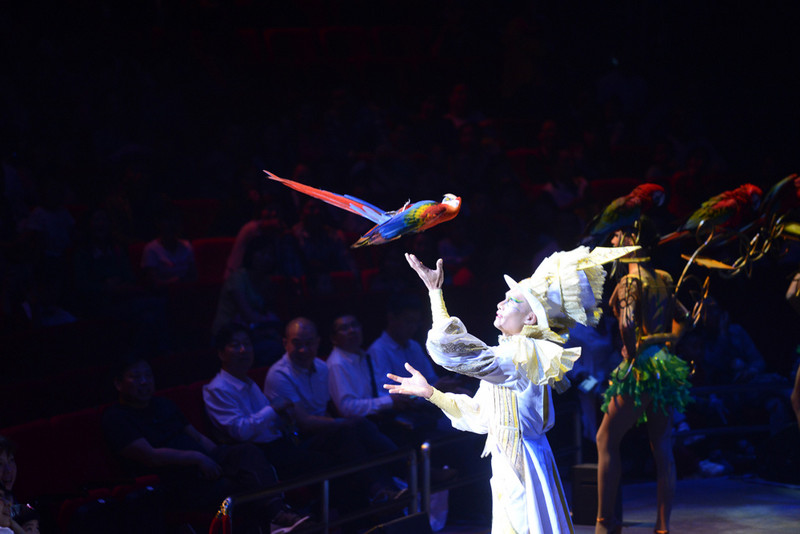
Here is a math problem the audience never sees solved: more than 300 performers, dozens of costume states across an 80-minute program, no intermission, and a concourse-to-ring turnaround measured in tens of seconds. The wardrobe operation — costume pre-sets in the wings, choreographed quick-change stations, and performers who train their changes like their acts — is the invisible act that keeps the visible ones on schedule. Watch the ensemble members who exit mid-show and reappear two numbers later in entirely different silhouettes; that is the wardrobe department running its own perfectly timed routine. The costume design itself is worth attention too: the production’s theatrical segments (the fairy-tale world of Magic Wonderland, the cinematic staging of Circus Hollywood) carry narrative detail down to the accessories, which is one more argument for sitting close at least once.
🔁 Rehearsal Rhythm: What Keeps a 25-Year Show Fresh
A nightly show founded in 2000 survives by evolving, and the program’s season-to-season evolution (our ranked line-up is a 2026 snapshot) implies the quiet machinery of it: new acts rehearsed into the rotation, veteran routines maintained at performance standard, and a cast that mixes international touring specialists with long-tenured company members. The evidence is visible from the seats — the precision of the ensemble entrances, the unforced handoffs between acts, the way a replacement-level performer slots into a formation without the formation noticing. Run the arithmetic the other way and the scale stuns: roughly 80 minutes nightly, 6,000 seats, three decades of calendar — the show has probably performed more often than any single production you have ever seen, including the ones you love.
🌍 The International Company: Casting as an Act of Its Own
One more layer deserves its own lens: the cast model itself. Trip.com’s official introduction describes a company of more than 300 circus artists from over 20 countries across Asia, Europe, the Americas and Africa — a breadth of origin you can hear in the pre-show warm-up chatter and see in the program’s stylistic range, from the European-fantasy theatricals of Magic Wonderland to the speed-school precision of the globe riders. What the room tells you between numbers is that this is not a parade of guest acts bolted together; it is a single company with shared timing, shared musical cues and a shared professional standard — the practical meaning of the production’s “Chinese creativity, global integration” slogan. For the performers, the venue is a long-run home engagement in one of the world’s most-watched circus cities; for the audience, it means an act you love tonight will likely be here when you return next year, polished another 365 nights further. Very few live productions on earth can promise that; it is the quietest, biggest reason the room feels this confident.
👀 How to Watch Like a Producer: A 5-Layer Game
Here is the game we now play, and it converts any seat into a producer’s seat. Layer one: pick an aerial act and follow one rigging line from release to retrieval. Layer two: during a transition, watch the floor crew instead of the ring. Layer three: pick one lighting call — the moment the house narrows — and notice how your own eyes obey it. Layer four: track one ensemble performer across two costume changes and reverse-engineer their quick-change route. Layer five: listen for the audible cues that sync the departments — drum hits that lift apparatus, swells that mask resets. Five layers, one evening, and the 80 minutes reveal themselves as a single choreography of performers, crew, light and sound. Pair it with the first-timer’s walkthrough for the logistics layer, and the evening itinerary for the schedule — that is the full stack, from parking spot to final bow, understood.
And if the five-layer game has hooked you the way it hooked us, the next show is a scan away — book the next date on Trip.com and go play it from a different tier.
❓ Frequently Asked Questions
How does the Chimelong International Circus stage its stunts safely?
The production runs behind the same nightly discipline every professional arena show uses: purpose-built apparatus and rigging engineered into the 6,000-seat theatre, rehearsed routines repeated to automaticity, and quick-change choreography that moves performers and equipment on precise cues. Visitors see only the polished 80 minutes — this guide walks through what is actually happening above, behind and beside the ring.
Can visitors see behind the scenes at the circus?
The show is performed as a single polished experience and there is no public backstage tour on a standard ticket. But you can watch the production work if you know where to look: rigging lines against the roof grid, the light-and-sound call pattern, the wardrobe logic of the quick changes, and the concourse rhythms before curtain. This post trains that eye — and the site’s individual act analyses (like Fire Wheel of Illusion) go deeper act by act.
How many performers are in the show?
More than 300 circus artists from over 20 countries across Asia, Europe, the Americas and Africa share the production, according to Trip.com’s official introduction — one of the largest international casts in the industry, staged nightly since 2000 for a cumulative audience of over 50 million.
What should I watch for to appreciate the staging?
Four things, covered in the guide below: the rigging lines and their choreography, the lighting calls that steer your eyes, the wardrobe system that makes 80-minute quick changes possible, and the timing discipline of entrances. Once you can see those layers, the show doubles.
Where should I sit to see the production craft, not just the acts?
Upper-mid tiers, center sections. Height reveals the geometric patterns, the lighting design and the cross-stage choreography that proximity hides — the same conclusion our seating guide reaches for choreography-lovers.
